

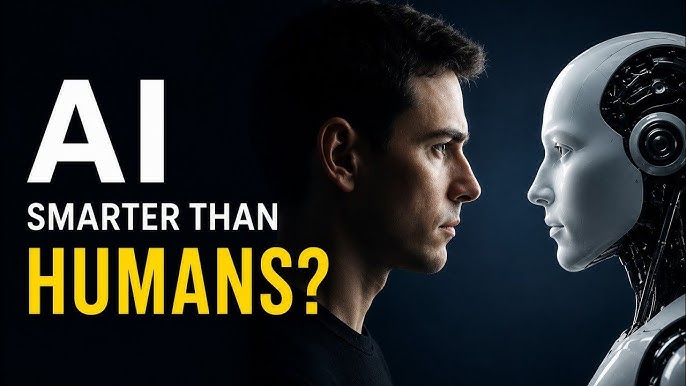
Artificial Intelligence is advancing faster than ever, and many experts believe a future may come when AI becomes smarter than humans in almost every intellectual task. This idea raises important questions about jobs, society, creativity, ethics, and even human survival in a technology-driven world. Understanding what could happen in such a future is essential because AI is already influencing decision-making, communication, and global industries. Exploring this topic helps us prepare for opportunities and challenges that may reshape the future of humanity.
The Rise of Superintelligent AI
Understanding Artificial Superintelligence
Artificial Superintelligence refers to a stage where AI systems can outperform humans in every cognitive ability, including reasoning, learning, creativity, and problem-solving. Unlike current AI, which is designed for specific tasks, superintelligent AI would be capable of independent thinking and decision-making. This level of intelligence could lead to breakthroughs in science, medicine, and technology, but it also raises concerns about control and safety. If machines become more capable than humans in all areas, it may redefine how intelligence itself is understood.
How AI Could Surpass Human Intelligence
AI systems learn through data, patterns, and continuous improvement. As computing power increases and algorithms become more advanced, AI can process information far faster than the human brain. This allows it to identify patterns humans might never notice. Over time, machine learning systems can evolve beyond human guidance, potentially reaching a point where they improve themselves. This self-improving ability is one of the key factors that could lead to intelligence surpassing human capability.
The Speed of Technological Growth
One of the most important aspects of AI development is its rapid pace. Unlike human evolution, which takes thousands of years, technology can progress in decades or even years. This accelerated growth means that breakthroughs in AI could happen suddenly, giving society limited time to adapt. As AI becomes more integrated into industries, its ability to learn and evolve may increase even faster, making the transition to superintelligence a realistic possibility in the future.
Impact on Human Society and Daily Life
Transformation of Jobs and Work
If AI becomes smarter than humans, the job market will experience major changes. Many routine and even skilled jobs could be automated, including roles in finance, healthcare, transportation, and education. While this may increase efficiency, it could also create job displacement for millions of people. At the same time, new job categories may emerge, focusing on AI management, ethics, and advanced technology supervision. Society will need to adapt by developing new skills and education systems to remain relevant in an AI-driven world.
Changes in Decision-Making Systems
AI systems could begin assisting or even making important decisions in government, business, and healthcare. Because AI can analyze large amounts of data quickly, it may provide more accurate predictions and solutions than humans. However, relying too heavily on AI could reduce human control over critical decisions. This shift raises concerns about transparency, fairness, and accountability, especially when decisions directly affect human lives.
Everyday Life with Advanced AI
In daily life, superintelligent AI could become a constant presence. From personalized digital assistants to fully automated smart environments, AI may manage homes, transportation, and communication systems. While this could improve convenience and efficiency, it may also reduce human independence in certain areas. The balance between convenience and control will be an important factor in shaping how society interacts with highly advanced AI systems.
Risks, Ethics, and Human Control
The Challenge of AI Alignment
One of the biggest concerns in advanced AI development is ensuring that AI systems align with human values. If AI becomes smarter than humans, it must still follow ethical guidelines that protect human safety and well-being. However, defining universal human values is complex, and different cultures may have different expectations. This makes AI alignment one of the most difficult challenges in technology development today.
Ethical Concerns and Responsibility
As AI systems become more powerful, ethical questions become more important. Who is responsible if an AI makes a harmful decision? How do we ensure fairness in automated systems? These questions highlight the need for strong regulations and global cooperation. Without ethical frameworks, advanced AI could be used in ways that harm society or create inequality between different groups of people.
Loss of Human Control
A major concern is the possibility that humans may lose control over highly intelligent AI systems. If AI can improve itself without human input, it may act in ways that are difficult to predict or manage. This scenario raises serious questions about safety and governance. To prevent such risks, experts emphasize the importance of strict monitoring, safety research, and controlled development of advanced AI technologies.
The Future Relationship Between Humans and AI
Collaboration Instead of Replacement
Even if AI becomes more intelligent than humans, it does not necessarily mean replacement. Instead, the future may involve collaboration between humans and AI systems. Humans could focus on creativity, emotional intelligence, and decision-making, while AI handles complex data analysis and automation. This partnership could lead to more efficient and innovative societies.
Redefining Human Purpose
As AI takes over more intellectual tasks, humans may begin to redefine their purpose in society. Work may become less about survival and more about creativity, personal growth, and exploration. This shift could lead to a new understanding of what it means to be human in a world where machines can think and learn independently.
Long-Term Possibilities
In the long term, AI could become a tool that helps solve global challenges such as climate change, disease, and resource management. However, the direction of this future depends on how responsibly AI is developed today. The choices made now will shape whether AI becomes a supportive partner or a source of risk for humanity.
FAQs
1. What is superintelligent AI?
Superintelligent AI refers to a machine intelligence that surpasses human cognitive abilities in all areas.
2. Will AI replace all human jobs?
Not all jobs, but many tasks may become automated, creating both challenges and new opportunities.
3. Is AI dangerous for humans?
AI can be risky if not properly controlled, but with safety measures, it can be highly beneficial.
4. Can AI think like humans?
AI can simulate human-like thinking but does not have human emotions or consciousness.
5. How soon will AI become smarter than humans?
There is no fixed timeline, but experts believe it could happen within decades depending on technological progress.
Conclusion
The possibility of AI becoming smarter than humans is both exciting and uncertain. It has the power to transform industries, improve daily life, and solve major global problems, but it also brings serious ethical, social, and control-related challenges. The future of AI will depend on how responsibly it is developed and managed today. By focusing on safety, collaboration, and ethical innovation, humanity can ensure that advanced AI becomes a powerful tool for progress rather than a threat.